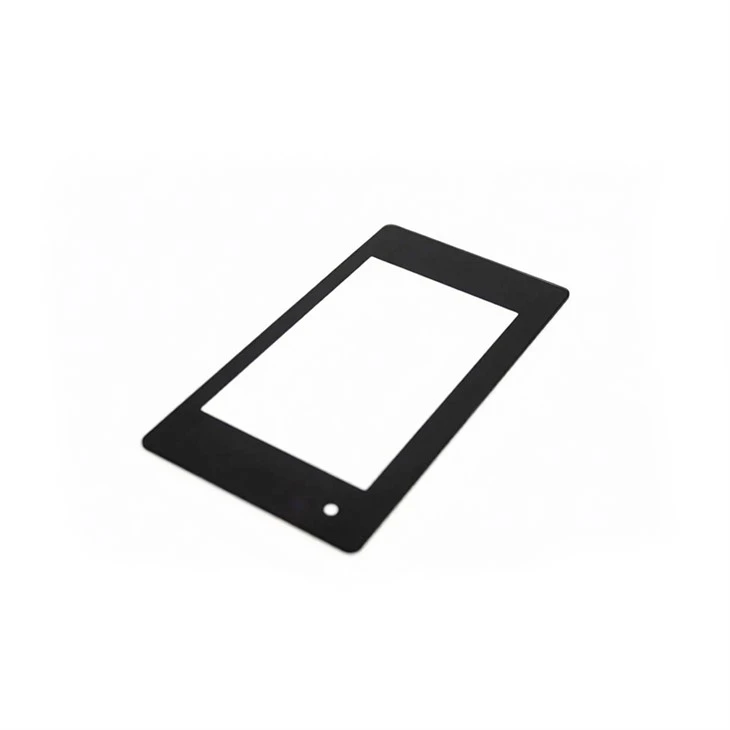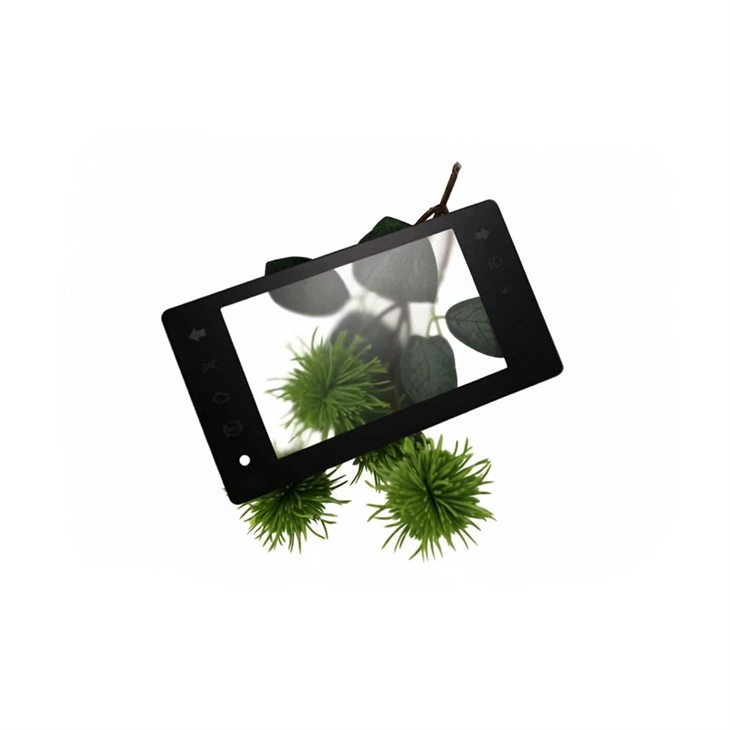
AG Coated Glass-
Anti-Glare Glass for Displays, Touchscreens and Industrial Applications
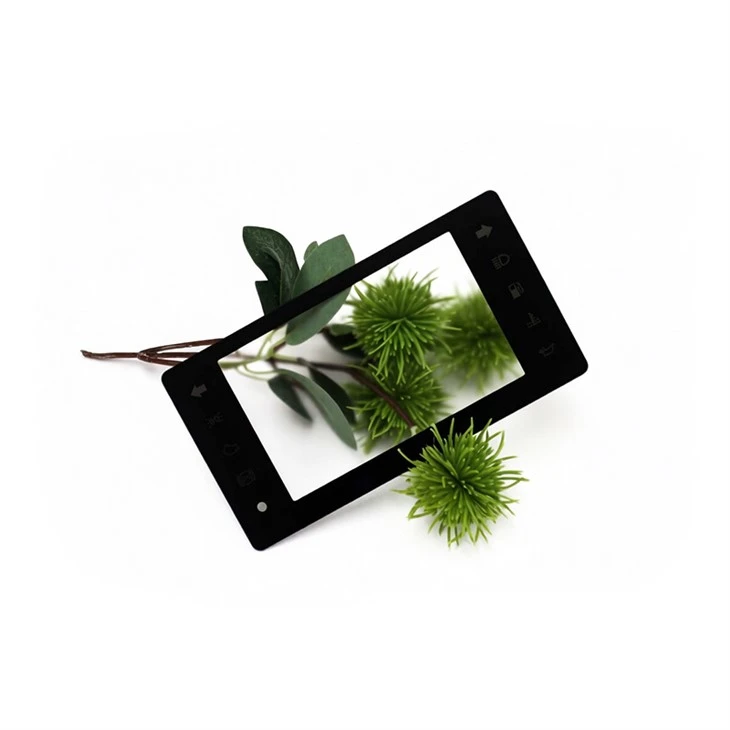
Custom AG coated glass with controlled optical performance for applications where reflected light affects screen readability, image quality and user comfort.
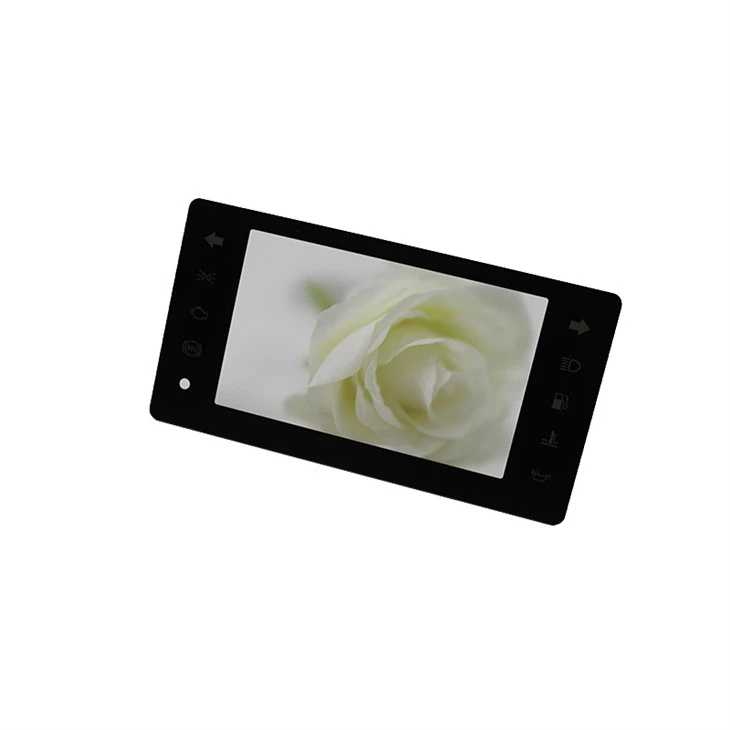
Huabo supplies AG coated glass / anti-glare glass for display and industrial applications, with customization available for glass thickness, size, surface treatment, optical performance and downstream processing.
Unlike ordinary glass, an AG-treated surface is engineered to diffuse reflected light rather than produce a strong mirror-like reflection. The result is a more readable display in environments affected by overhead lighting, windows or direct ambient light.
-
![Prevent Fingerprints Glass]() Prevent Fingerprints GlassTouchscreens are often plagued by fingerprints and glare. Huabo’s prevent fingerprints glass addresses both issues simultaneously. It combines AG (Anti-Glare) etching with an AF (Anti-Fingerprint)
Prevent Fingerprints GlassTouchscreens are often plagued by fingerprints and glare. Huabo’s prevent fingerprints glass addresses both issues simultaneously. It combines AG (Anti-Glare) etching with an AF (Anti-Fingerprint) -
![High-definition AG Coated Glass]() High-definition AG Coated GlassMany anti-glare screens make images look blurry or fuzzy. We designed our product to fix this issue. We keep the haze level very low, between 1% and 5%. This means the glass stays as clear as a
High-definition AG Coated GlassMany anti-glare screens make images look blurry or fuzzy. We designed our product to fix this issue. We keep the haze level very low, between 1% and 5%. This means the glass stays as clear as a -
![Impregnated Glass]() Impregnated GlassPublic touchscreens often become dirty due to fingerprints and oil. Huabo’s impregnated glass features a special coating that repels water and oil. Marks from fingers do not stick easily, and dirt
Impregnated GlassPublic touchscreens often become dirty due to fingerprints and oil. Huabo’s impregnated glass features a special coating that repels water and oil. Marks from fingers do not stick easily, and dirt -
![Heat Resistant Glass Sheet]() Heat Resistant Glass SheetSome environments are extremely demanding on standard glass. Sunlight, hot factory conditions, and medical equipment can cause ordinary screens to crack or yellow over time. Huabo’s heat resistant
Heat Resistant Glass SheetSome environments are extremely demanding on standard glass. Sunlight, hot factory conditions, and medical equipment can cause ordinary screens to crack or yellow over time. Huabo’s heat resistant


Mechanism of Specular Reflection Control
A conventional glass surface is relatively smooth. When light reaches it, part of the light is reflected in a concentrated direction, creating visible glare.
AG treatment changes the surface structure so that reflected light is distributed over a wider range of directions.
Smooth Surface
→ Strong specular reflection
→ Visible Glare
Micro-Structured AG Surface
→ Diffuse reflection
→ Reduced Glare Contrast
Display
→ Less distracting reflected glare
AG glass does not mean zero reflection. Its purpose is to control the character of reflected light so that bright reflections become less visually distracting.
AG Glass Optical Performance Specification
|
Parameter |
What It Means |
Why It Matters |
|
Gloss |
Surface gloss measured at a defined angle (60°) |
Lower gloss generally indicates a stronger matte / anti-glare surface |
|
Haze |
Wide-angle scattered light |
Excessive haze can make images appear cloudy |
|
Clarity |
Narrow-angle visual scattering |
Higher clarity helps preserve image definition |
|
Transmittance |
Visible light passing through the glass |
Higher transmittance helps preserve display brightness |
|
Surface Roughness (Ra) |
Micro-texture of the AG surface |
Influences light diffusion, tactile feeling and visual appearance |
|
Sparkle |
Granular visual effect on high-resolution displays |
Important for monitors, touchscreens and high-PPI displays |
|
Reflectance |
Light reflected by the surface |
Helps evaluate residual reflection |
AGC's published AG data demonstrates why these parameters should be evaluated together rather than using a single AG level as the specification. For example, its LST range shows different combinations of Gloss, Haze, Clarity and Ra across products.
Application-Based AG Grade Selection
|
Application Environment |
Typical Requirement |
AG Selection Direction |
|
Controlled indoor lighting |
High image clarity |
Light AG (Gloss 90–110 GU) |
|
Office / commercial displays |
Balanced glare and clarity |
Light-to-medium AG (Gloss 70–90 GU) |
|
Industrial HMI |
Stronger ambient-light control |
Medium AG (Gloss 50–70 GU) |
|
Outdoor / high-brightness displays |
Greater glare control |
Medium-to-strong AG (Gloss 35–50 GU) |
|
High-resolution display |
Low visual grain / sparkle |
Special low-sparkle AG |
|
Design / professional monitors |
High clarity |
Fine AG surface |
AG performance is created by controlling the microscopic structure of the glass surface. Surface roughness influences how incident light is scattered.
Technical Procurement Parameters:
▪ Ra (Average Surface Roughness)
▪ Rz (Maximum Height of Profile)
▪ Rsm (Mean Spacing of Profile Irregularities)
▪ Surface Texture Uniformity
A production target should not only define an average roughness value. It should also control uniformity across the usable glass area to avoid visible differences in:
▪ Surface Matte Visuals
▪ Glare Diffusion Level
▪ Haze Uniformity
▪ Image Sharpness

Visible Light Transmittance Performance
AG treatment should reduce distracting reflection without unnecessarily reducing display brightness.
Target Specification:
Visible Light Transmittance: ≥ 89.0%
Transmittance must be evaluated in combination with:
▪ Substrate Material
▪ Glass Thickness
▪ Haze Target
▪ Additional Functional AR Coatings
AG Glass Manufacturing Workflow
Raw Glass Substrate QC
Inspect substrate thickness tolerance, surface defects, and visual purity.
CNC Cutting & Edge Profiling
Cut glass to size, process edge profiles, drill holes, and clean edges.
AG Micro-Surface Treatment
Controlled chemical etching or surface treatment to achieve target Gloss and Ra.
Ultrasonic Precision Cleaning
Multi-stage automated ultrasonic wash to remove residual processing chemistry and particles.
Chemical Strengthening / Secondary Coating
Ion-exchange strengthening followed by optional AR or AF coating deposition.
Optical Parameter QC
Verify Gloss, Haze, Clarity, Transmittance, and Sparkle using calibrated optical meters.
Dimensional & Visual Inspection
Complete checks on dimensions, edge chamfers, printing registration, and surface defect limits.
Export Wooden Crate Packing
Vacuum sealing and protective inter-layer packaging inside sea-worthy export crates.
OEM / Wholesale Quality Control Protocol
|
Quality Item |
Inspection Method / Concern |
|
Gloss Consistency |
60° Glossmeter / Verified against batch tolerance (±5 GU) |
|
Haze & Clarity |
Spectrophotometer / Controlled light scattering limits |
|
Transmittance |
Luminous Transmittance Meter / Preserves backlight efficiency |
|
Surface Roughness |
Profilometer (Ra / Rsm) / Uniform texture verification |
|
Dimensional Accuracy |
Coordinate Measuring Machine (CMM) / Fits bezel tolerances |
|
Hardness & Adhesion |
Pencil Hardness (ASTM D3363) & Cross-Cut Test (ASTM D3359) |
|
Packaging Security |
Drop Test / Vacuum sealed with protective interleaving |
Request AG Glass Samples or a Wholesale Quote
Send your engineering drawings or optical specifications to our technical team for review.
Process Workflow:
Substrate Review
→ Gloss / Haze Matching
→ DFM Drawing Analysis
→ Sample Fabrication
→ Batch Production
[Request AG Glass Samples (Custom Gloss & Haze Available)]
[Send Your CAD Drawing for DFM Analysis]
FAQ
As one of the most professional ag coated glass manufacturers and suppliers in China, we're featured by quality products and good service. Please rest assured to buy high-grade ag coated glass in stock here and get quotation from our factory. Customized orders are welcome.
High definition AG Coated Glass, Prevent Fingerprints Glass, Impregnated GlassPopular Products